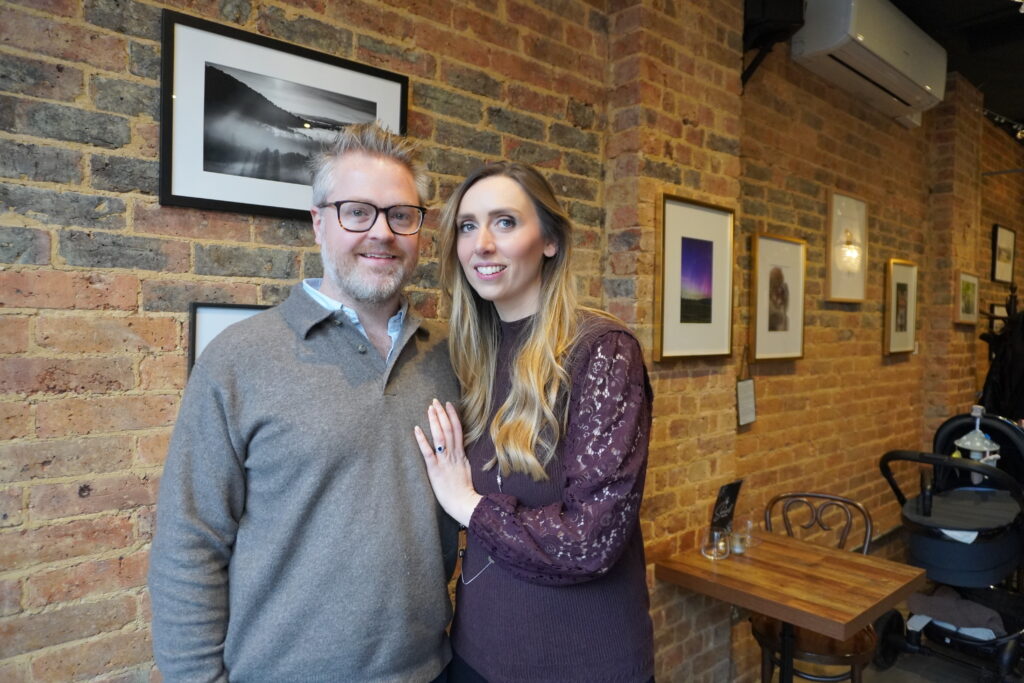
Surrey mum Michaela Ingram Fuller joins forces with Harry’s HAT and our Get-A-Head campaign to push for earlier diagnosis of hydrocephalus.
Michaela’s Story
After living nearly three decades with undiagnosed hydrocephalus in a case that astonished clinicians, 37‑year‑old Michaela Ingram Fuller from Surrey is on a mission to prevent others facing the same fate. She’s reached out to Harry’s HAT to help raise awareness and call for better early‑years checks, through our Get-A-Head campaign.
Watch her full story here:
Michaela was 29 when doctors finally discovered the condition that had silently shaped her entire life. Until that point, she had endured a long list of unexplained symptoms; behavioural challenges, depression, changes in bladder function, tremors, and cognitive difficulties – each diagnosed as separate problems throughout her childhood and early adulthood.
Then, her life suddenly changed in 2018.

“The day I was diagnosed was a very normal January evening. I went to the bathroom, and my now husband heard a bang. He opened the door to find me on the floor, and I’d forgotten who he was. He rushed me to A&E, and it was there that we found out I had a significant build‑up of fluid on my brain.
“I’d never heard the word hydrocephalus before then, which I think goes to show how little people know about it.”
What is hydrocephalus?
Hydrocephalus is an abnormal build‑up of cerebrospinal fluid (CSF) in the brain, creating pressure that can cause lifelong damage if left untreated. It affects around 1 in 770 babies in the UK and is the most common reason for brain surgery in children, yet public awareness remains low. While there is no cure, symptoms are typically managed with an implanted device called a shunt, which drains excess fluid from the brain to another part of the body.
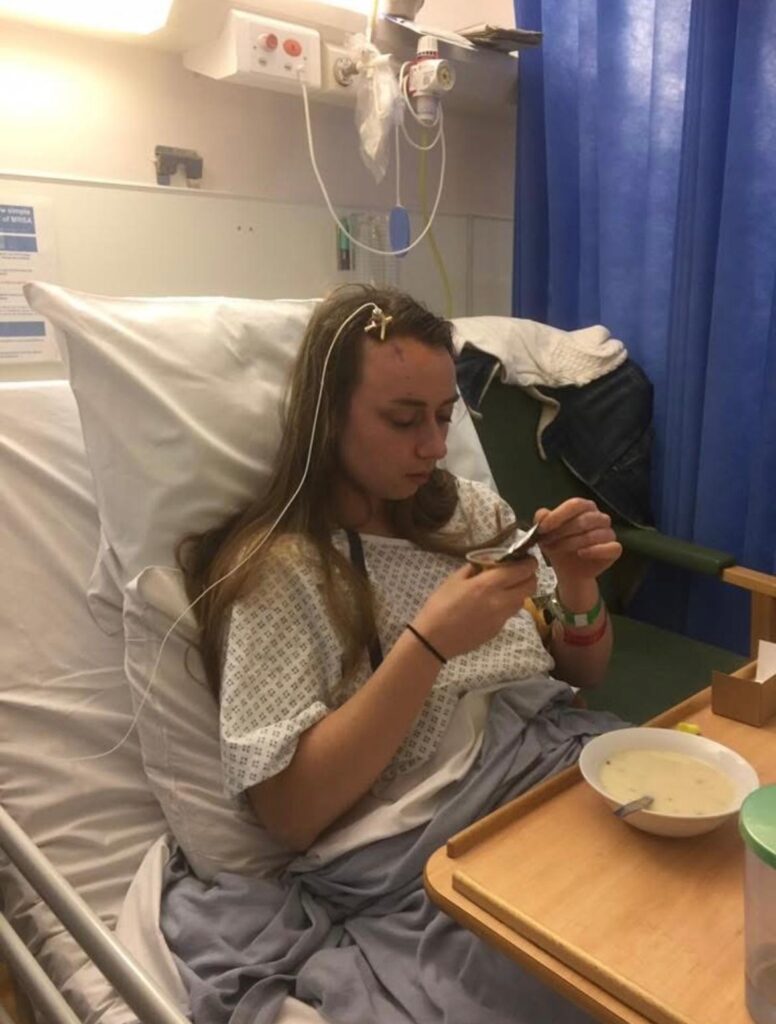
In Michaela’s case, the cause was aqueductal stenosis – a narrowing of one of the brain’s fluid‑draining channels.
“I think I was able to survive with the build-up of pressure for so long because it happened over such a long period of time. The neurosurgeons said my brain had adapted, and that’s how they decided that my hydrocephalus must have been there from birth.
“They didn’t know how I was still functioning – but I was. I was in a normal job, I had a boyfriend, I went out with my friends, I had hobbies.”
A new mum on a mission
Now a mother to four‑month‑old Daisy, Michaela is committed to raising awareness of routine head‑circumference measurements in infants – an important tool for spotting hydrocephalus early.
An unusually large or rapidly growing head in a baby under 12 months old can be an early warning sign.
Get-A-HEAD
Harry’s HAT’s Get-A-Head campaign is working to educate new parents and parents-to-be about the importance of routine head measurements during a child’s first year; a quick, pain free, non-invasive check that could lead to earlier diagnosis and treatment.
“I think my main concern is about whether my daughter has it,” Michaela said. “Because of what I’ve been through, I don’t want Daisy to go through that.
“Even though I have hydrocephalus, I didn’t know that measuring a baby’s head is one of the ways to find it. I don’t think there’s enough explanation around why these measurements are done for expectant mothers.”

Caroline Coates, CEO of Harry’s HAT said: “Michaela’s story is a powerful reminder of why early identification of hydrocephalus is so vital. No one should have to wait decades for a diagnosis, especially when simple, routine checks – like measuring a baby’s head – can provide crucial early clues. We are incredibly grateful to Michaela for sharing her experience and for supporting our Get‑A‑Head campaign. By speaking out, she is helping families to feel informed, empowered, and able to seek help sooner.”
Turning experience into empowerment
Michaela is now writing a book recounting her journey, in hopes of educating others and maybe even saving someone else from a delayed diagnosis.
“What’s really important for me is that people will read it and realise the person with hydrocephalus wrote this… I want people to be more aware of it so they’re more likely to get checked. I want medical professionals to read it and think about their patients.”
By sharing her story and supporting Harry’s HAT, Michaela hopes to empower families to recognise the signs of hydrocephalus early, ask questions, and advocate for themselves.
“I think it’s always best to air on the side of caution with these things, especially when it’s something as important as the brain. It’s the whole central point of your entire existence – it needs to be okay.”
Michaela hopes to complete her book by the end of the year.